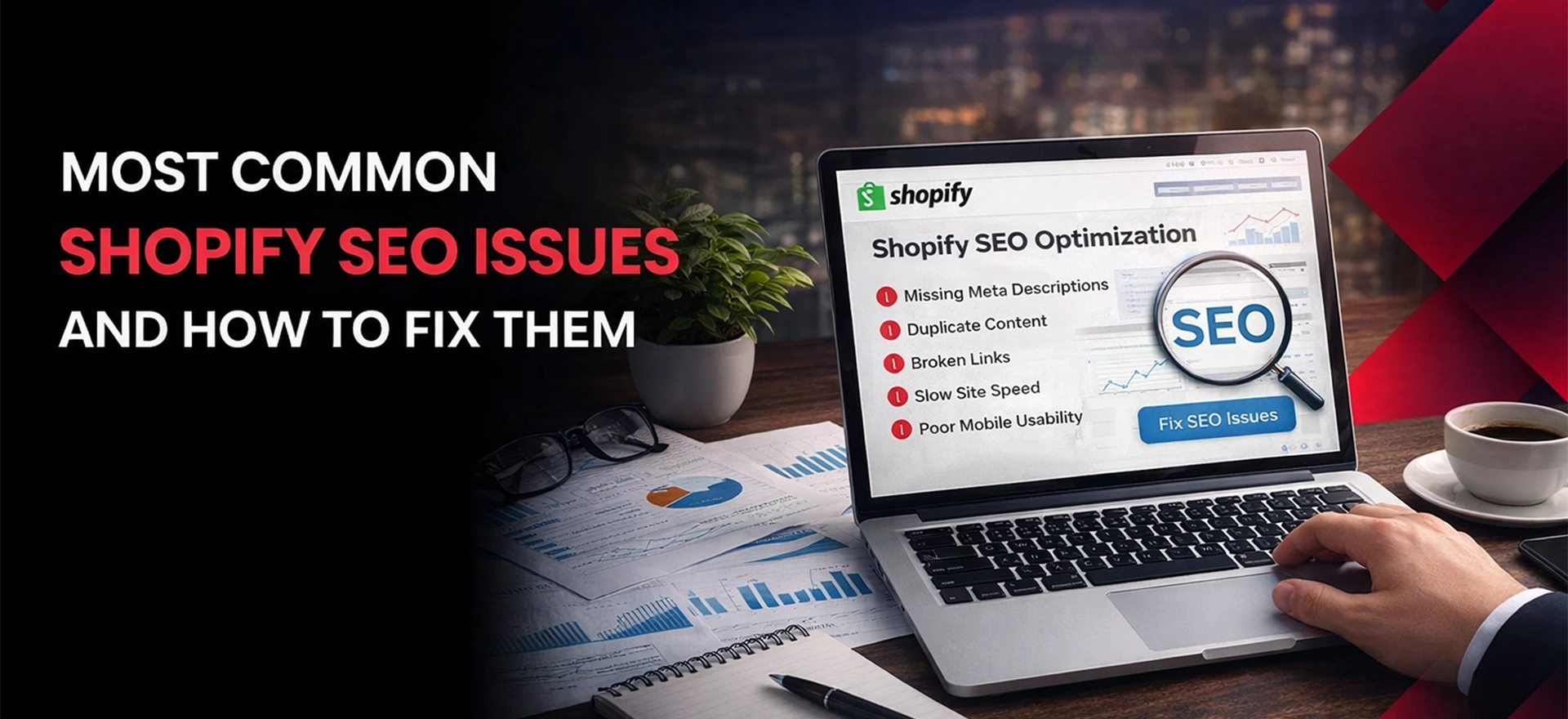

Running an online store today is not just about having great products it’s about being discoverable. Many eCommerce businesses struggle to generate consistent organic traffic, even when they offer competitive pricing and quality products. The reason is simple: without a strong SEO foundation, your store remains invisible to potential customers.
An effective eCommerce SEO checklist helps you identify gaps, fix issues, and build a system that drives long-term growth. Unlike regular websites, online stores have complex structures, hundreds (or thousands) of pages, and dynamic elements like filters and product variations.
In this guide, you’ll learn a complete, practical checklist covering keyword research, technical SEO, content, UX, and authority building. Whether you’re running a Shopify, WooCommerce, or custom store, this roadmap will help you increase traffic, improve rankings, and ultimately drive more sales in 2026.
Why an eCommerce SEO Checklist Matters
eCommerce SEO is more complex than traditional SEO because it involves multiple page types, dynamic URLs, and constantly changing inventory. Without a structured approach, it’s easy to overlook critical issues like duplicate content, crawl errors, or poorly optimized product pages.
An SEO checklist acts as a systematic guide to ensure that every aspect of your website is optimized. It helps you identify technical problems, improve content quality, and align your site with search engine requirements. For example, a poorly structured category page or broken internal linking can significantly impact rankings, even if your products are high quality.
Additionally, search engines constantly update their algorithms. What worked last year may not work today. Regularly following a checklist ensures your store stays updated and competitive. In short, an eCommerce SEO checklist is not just helpful it’s essential for sustainable growth and long-term visibility.
Start With Keyword Research for Products and Categories
Keyword research is the foundation of any successful eCommerce SEO strategy. Without understanding what your customers are searching for, you risk optimizing your pages for the wrong terms. The goal is to identify keywords that match user intent whether it’s informational, transactional, or navigational.
For eCommerce stores, you need to target different types of keywords. Product pages should focus on high-intent keywords like “buy running shoes online,” while category pages should target broader terms like “men’s running shoes.” At the same time, blog content can target informational queries such as “best running shoes for beginners.”
Long-tail keywords are especially valuable because they have lower competition and higher conversion rates. For example, instead of targeting “perfume,” you can target “long-lasting floral perfume for women.”
Proper keyword mapping is also important. Each page should have a unique primary keyword to avoid keyword cannibalization. This ensures search engines understand which page to rank for a specific query, improving your overall visibility.
Fix Site Architecture Before You Optimise Content
A well-structured website is crucial for both users and search engines. If your site architecture is confusing, it becomes difficult for search engines to crawl your pages and for users to find what they need. This directly impacts rankings and conversions.
Your site should follow a logical hierarchy: homepage → category → subcategory → product. This structure ensures that important pages are easily accessible and not buried too deep. Ideally, users should reach any product within three clicks from the homepage.
Internal linking also plays a key role. Linking related products, categories, and blog content helps distribute authority across your site and improves navigation. Breadcrumbs further enhance usability and help search engines understand page relationships.
Clean URLs are equally important. Avoid long, complex URLs with unnecessary parameters. Instead, use simple, keyword-rich URLs that clearly describe the page content. A strong site architecture lays the foundation for all other SEO efforts.
Get the Technical SEO Foundations Right
Technical SEO ensures that your website is accessible, crawlable, and indexable by search engines. Without it, even the best content and keywords won’t perform effectively.
Start by optimizing your XML sitemap and submitting it to Google Search Console. This helps search engines discover your pages more efficiently. Next, review your robots.txt file to ensure you’re not blocking important pages.
Duplicate content is a common issue in eCommerce due to filters and product variations. Use canonical tags to indicate the preferred version of a page. Also, manage faceted navigation carefully to avoid creating thousands of unnecessary URLs.
Page speed and mobile usability are critical ranking factors. Slow-loading pages can lead to high bounce rates and lost sales. Optimize images, reduce scripts, and ensure your site performs well on mobile devices.
Regularly check for broken links, redirect errors, and crawl issues. Technical SEO may seem complex, but it forms the backbone of your entire SEO strategy.
Optimise Category Pages for Rankings and Discovery
Category pages are often the most powerful pages on an eCommerce site because they target high-volume keywords. However, many stores treat them as simple product listings, which limits their SEO potential.
To optimize category pages, start by adding unique titles and meta descriptions that include your target keywords. Include a short introduction at the top of the page to provide context, and add detailed content at the bottom to support SEO without affecting user experience.
Internal linking is also important. Link to top products, related categories, and relevant blog content to improve navigation and authority flow.
Avoid thin content by providing helpful information such as buying guides, product comparisons, or FAQs. This not only improves rankings but also helps users make informed decisions.
A well-optimized category page can rank for competitive keywords and drive consistent traffic to your store.
Optimise Product Pages for Search and Conversions
Product pages are where conversions happen, so they must be optimized for both SEO and user experience. Start with unique product titles and descriptions. Avoid copying manufacturer descriptions, as this can lead to duplicate content issues.
Include your target keywords naturally in the title, description, and URL. Use high-quality images and optimize them with descriptive alt text. This improves both accessibility and image search visibility.
Adding customer reviews and ratings builds trust and provides fresh content, which search engines value. Include detailed product information such as specifications, benefits, and usage instructions to help users make informed decisions.
Internal linking is also essential. Link related products and complementary items to increase average order value.
A well-optimized product page not only ranks better but also improves conversion rates by providing a complete and trustworthy shopping experience.
Create Content That Supports the Full Buying Journey
eCommerce SEO is not just about product and category pages. Content marketing plays a crucial role in attracting users at different stages of the buying journey.
Blog posts, buying guides, and comparison articles help capture informational queries and guide users toward your products. For example, a blog titled “Best Perfumes for Summer in UAE” can drive traffic and link to relevant product pages.
Content also helps build authority and trust. By providing valuable information, you position your brand as an expert in your niche. This increases the likelihood of users choosing your products over competitors.
Regularly update your content to keep it relevant and accurate. Identify content gaps and create new articles to target additional keywords.
A strong content strategy not only improves SEO but also enhances the overall customer experience.
Improve UX, Mobile Experience, and Page Speed
User experience is a critical factor in eCommerce SEO. A website that is difficult to navigate or slow to load will drive users away, regardless of how well it ranks.
Mobile optimization is especially important, as most users shop on their phones. Ensure your site is responsive and provides a seamless experience across all devices.
Page speed directly affects both rankings and conversions. Optimize images, use caching, and minimize unnecessary scripts to improve loading times.
Clear navigation, intuitive filters, and a fast checkout process enhance usability and encourage users to complete purchases.
By focusing on UX and performance, you not only improve SEO but also create a better experience for your customers.
Add Structured Data for Rich Results
Structured data, or schema markup, helps search engines understand your content and display it more effectively in search results.
For eCommerce sites, product schema is particularly important. It allows search engines to display information such as price, availability, and ratings directly in search results. This can significantly improve click-through rates.
Breadcrumb schema helps users understand site structure, while FAQ schema can enhance visibility for informational content.
Implementing structured data may require technical expertise, but the benefits are substantial. It improves visibility, enhances search appearance, and provides users with more information before they click.
Strengthen Authority With Backlinks and Brand Signals
Backlinks remain one of the most important ranking factors in SEO. They signal to search engines that your website is trustworthy and authoritative.
Focus on earning high-quality backlinks from relevant websites. This can be achieved through guest posting, partnerships, and creating valuable content that others want to link to.
Digital PR campaigns, influencer collaborations, and product reviews are also effective ways to build authority.
Additionally, brand mentions even without links can contribute to your online presence. Monitor and reclaim unlinked mentions to maximize their value.
Building authority takes time, but it is essential for long-term SEO success.
Track, Measure, and Improve Continuously
SEO is not a one-time task it’s an ongoing process. Regular monitoring and analysis are essential to understand what’s working and what needs improvement. Use tools like Google Analytics and Google Search Console to track traffic, rankings, and user behavior. Identify top-performing pages and optimize underperforming ones. Regular audits help you catch technical issues, update outdated content, and stay aligned with search engine updates. By continuously refining your strategy, you can maintain and improve your rankings over time.
FAQs
What is an eCommerce SEO checklist?
An eCommerce SEO checklist is a structured guide that outlines all the essential steps needed to optimize an online store for search engines. It includes keyword research, technical SEO, content optimization, site structure, and performance improvements. By following a checklist, businesses can ensure they are not missing critical elements that impact rankings and traffic. It also helps maintain consistency and allows store owners to perform regular audits to identify and fix issues.
How often should I audit my eCommerce website for SEO?
It is recommended to perform a full SEO audit at least every 3 to 6 months. However, ongoing monitoring should be done regularly using tools like Google Search Console and analytics platforms. Frequent audits help identify technical issues, content gaps, and performance drops before they affect rankings. For fast-growing eCommerce stores, more frequent audits may be necessary to keep up with changes in inventory and website structure.
Which pages are most important for eCommerce SEO?
Category pages and product pages are the most important for eCommerce SEO. Category pages target broader keywords and attract high traffic, while product pages focus on conversions. Additionally, blog content plays a supporting role by targeting informational queries and driving users to product pages. A balanced approach that optimizes all these page types ensures better visibility and performance.
How do I fix duplicate content in an online store?
Duplicate content is common in eCommerce due to product variations and filters. To fix it, use canonical tags to indicate the preferred version of a page. Avoid copying manufacturer descriptions and create unique content for each product. Managing URL parameters and controlling faceted navigation also helps reduce duplication. Regular audits can identify and resolve duplicate content issues effectively.
Is category page SEO more important than product page SEO?
Both are important, but category pages often have a greater impact on traffic because they target high-volume keywords. Product pages, on the other hand, are crucial for conversions. A strong SEO strategy should focus on optimizing both, ensuring that category pages attract visitors while product pages convert them into customers.
Conclusion
An effective eCommerce SEO checklist is the key to building a successful online store in 2026. From keyword research and technical SEO to content creation and user experience, every element plays a role in driving traffic and increasing sales.
The most important takeaway is that SEO is an ongoing process. Regular audits, continuous optimization, and staying updated with trends are essential for long-term success.
If you’re serious about growing your eCommerce business, start implementing this checklist step by step. The sooner you begin, the faster you’ll see results.